
Thieves Can Now Steal Your Car Without Touching Your Keys. Here's How Relay Theft Works — And Why The Best Defense Is Dumber Than Your Car.
Two people, one radio device, under a minute — no broken glass, no alarm. If your car has keyless entry, this article explains exactly how they do it, the free defenses that genuinely help, where each one quietly fails, and the one thing a computer cannot argue with.
- How two thieves with a relay device unlock and start a keyless car through your front door — while your keys sit in the kitchen.
- The free defenses that genuinely help (Faraday pouch, key placement) — and the quiet failure point built into every one of them.
- Why security researchers found roughly 85% of keyless models tested can still be opened this way.
- The analog principle: anything digital can be spoofed. A steel cable clicked into a crash-rated buckle cannot.
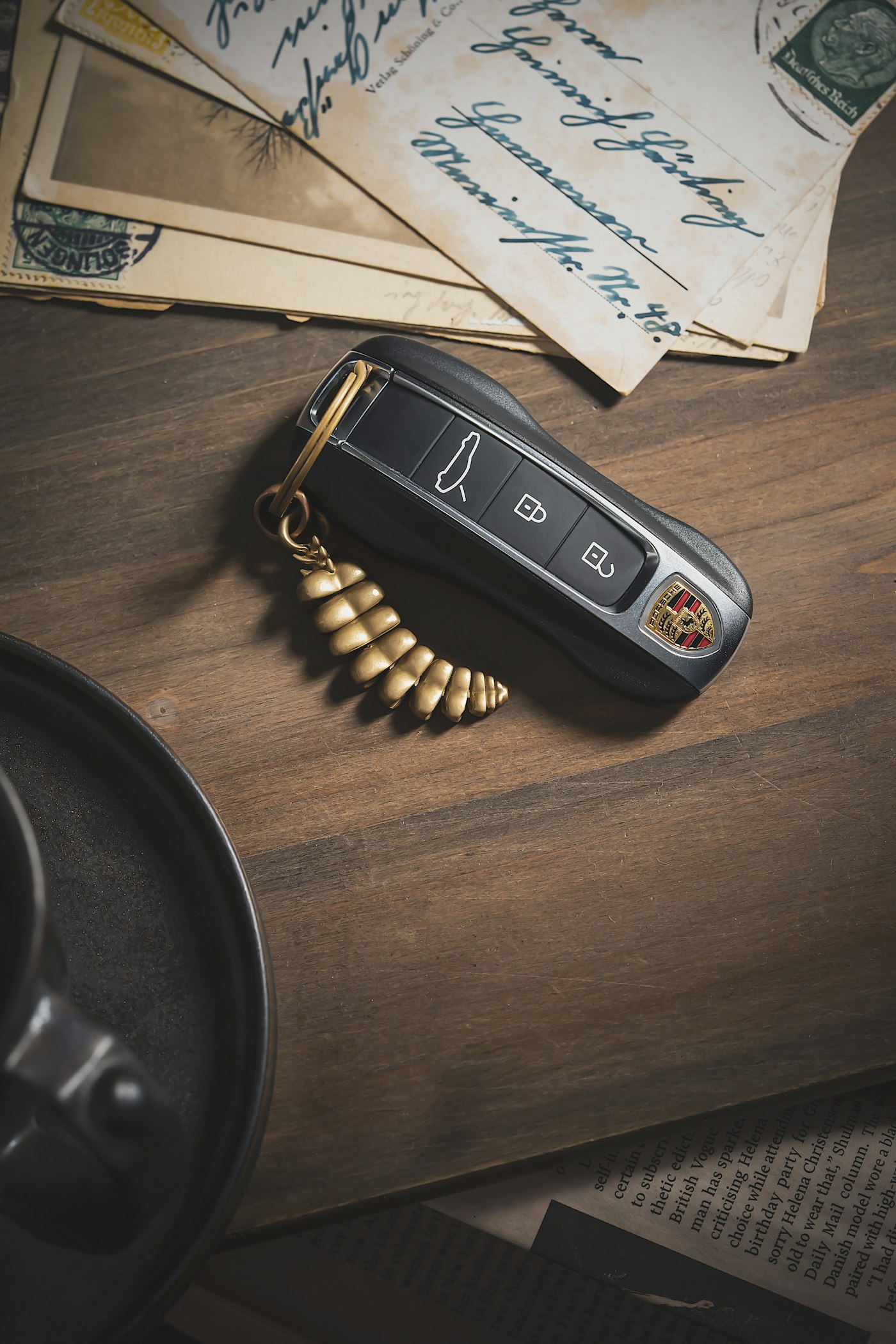
3:07 a.m. One thief at your front door, holding a device that listens through the wall. One at your driver's door. Your keys: in the kitchen, where they always are. Elapsed time when your car leaves the driveway: under one minute. Glass broken: none. Alarm triggered: none — the car believes its own key is standing right next to it.
Here is how your car gets stolen in 2026.
It's a little after 3 a.m. Two people walk up your street. One stops near your front door holding a device about the size of a lunchbox. The other stands beside your car.
Your key fob is where it always is — a bowl in the hallway, a hook in the kitchen, your jacket pocket by the stairs. It is doing what it was built to do: quietly announcing itself, over radio, every second of the night. I'm here. I'm here. I'm here.
The device at your door hears that whisper through the wall, amplifies it, and throws it fifty feet to the second device by your car. Your car hears its own key. So it does what it was built to do: it unlocks. The push-button start does what it was built to do: it starts.
No window breaks. No alarm sounds — why would it? As far as the car knows, the key is right there. Your car idles out of your driveway, and the whole thing takes less time than brewing a coffee. Investigators call it relay theft, and it's the reason keyless cars now disappear from locked driveways with the keys still inside the house.
You didn't leave the car unlocked. You didn't leave the keys in it. You bought the convenience feature the brochure sold you — walk up, door opens, push button, drive — and nobody at the dealership mentioned that the same radio handshake that unlocks the car for you can be stretched, through your own front wall, to unlock it for someone else. The flaw was sold to you factory-installed. What you can do is understand it — that's most of this article, and that part is free.
Three numbers that explain why this keeps working
Read these slowly.
Roughly 85% of keyless models tested remain vulnerable to relay attack, according to security researchers who put current vehicles through exactly this scenario. Not old cars. Current ones. The handshake most manufacturers use hasn't fundamentally changed.
In the UK — where keyless entry hit the mass market earliest — keyless thefts are up 57% in three years. Britain is the preview. The technique travels the same way every other technique has: in video tutorials and cheap hardware, and it's spreading in the US too.
In Australia, theft victims hit a 21-year high in 2024 — up 8% in a single year, with Victoria alone up 28%. A car is stolen roughly every 11 minutes in Australia.
And here's the strangest number of all: in the US, vehicle thefts actually fell to 659,880 in 2025 — down 23%. That sounds like good news until you understand why. Thieves didn't retire. They got pickier. The clumsy, smash-and-hotwire thefts are dying out; what's replacing them is quieter, faster, and aimed precisely at the cars that open themselves. The modern thief doesn't take more cars. He takes the easy ones — and a keyless car with no visible defense is the easiest car on the block.
The free defenses — use them, and know where they fail
This is a service article, so let's do the honest thing first: the defenses that cost little or nothing. They're real. Use them tonight.
1. A Faraday pouch (about the cost of lunch)
A small pouch lined with metallic mesh. Drop the fob in, and the mesh blocks its radio whisper — the relay device at your door hears nothing. This genuinely works. Where it fails: it only works when every fob is inside it, every single night. The spare fob in the kitchen drawer defeats it. Your spouse's fob in a coat by the door defeats it. The mesh also wears out with use and loses shielding — and a worn-out pouch looks exactly like a working one. You find out which you had when the driveway is empty.
2. Keep the keys deep in the house
Radio weakens with distance and obstacles. Keys stored far from exterior walls — a back bedroom, a metal tin — are much harder to relay. Where it fails: amplifiers keep getting stronger, apartments and small homes don't have a "deep," and this defense depends on every member of the household doing it correctly, every night, forever. Security that requires perfect nightly discipline from teenagers isn't security. It's a wish.
3. Turn the keyless feature off
Some manufacturers let you disable passive entry in the settings menu, or de-activate the fob overnight. Where it fails: many models simply don't offer it, the menus are buried, and you're paying to un-buy the feature you were charged for. Most owners try it once and drift back within a week.
Notice the pattern. Every one of these defenses is digital-versus-digital: block the signal, hide the signal, mute the signal. They all help. And they all share the same flaw — they fail silently. When a pouch wears out or a spare fob gets left out, nothing beeps. The first notification you get is an empty driveway.
The upgrades people buy next — and why they disappoint
- The louder alarm. A relay attack doesn't trigger it — the car believes the real key is present. And even when an alarm does sound, be honest: when did you last run outside because of one? Neither does anyone else.
- The GPS tracker. Useful — for finding out where your car went. Professional crews sweep for trackers within minutes, and what eventually gets recovered is often a stripped shell. A tracker is a search tool, not a defense. It starts working after you've already lost.
- The $1,500 aftermarket immobilizer. A genuine option — professionally installed kill switches make a car much harder to drive off. But it's a four-figure job with wiring labor, and here's the uncomfortable part: it's still electronics. You're betting that your added computer outsmarts their next device. That's the same arms race, with a bigger buy-in.
- The old bent Club from the 90s. Right instinct — wrong tool. The old steel bars clamped onto the rim alone; thieves learned to defeat the clamp or bend the hook. And they were so heavy and awkward that owners quit using them within a month. A lock that stays in the trunk protects the trunk.
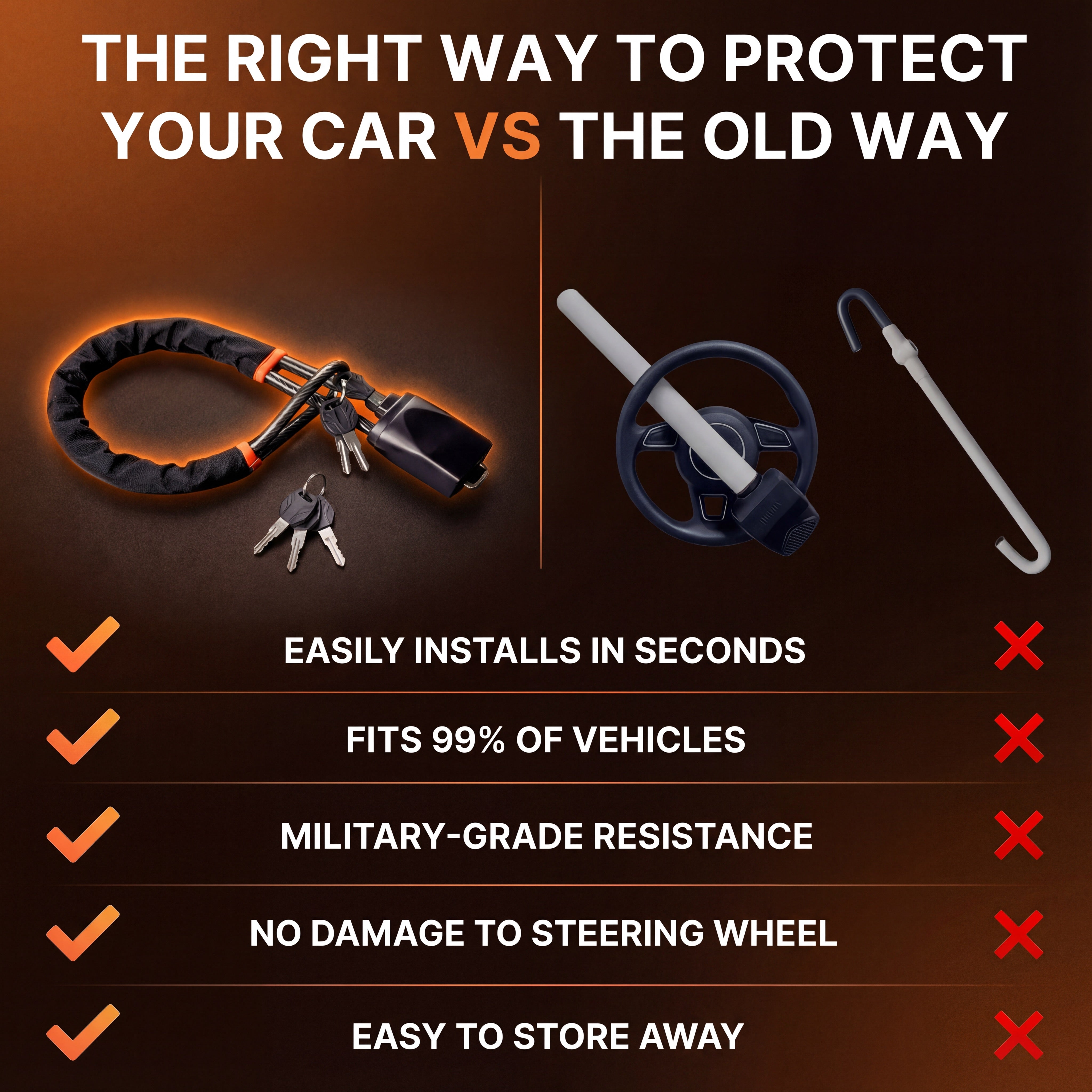
The analog principle
Step back and look at the whole battlefield for a second.
The thief's entire toolkit is electronic. Relay boxes, signal amplifiers, code grabbers, key cloners. Every one of those tools attacks the same surface: the part of your car that listens. The radio. The computer. The software.
That's the principle. You cannot relay a cable. You cannot clone it, boost it, or code around it. A physical lock has no signal to intercept and no software to fool — which means the thief's entire investment in electronics buys him nothing against it. To beat steel he has to stop being a hacker and become a laborer: cutting tools, noise, sparks, time. In a residential driveway. At 3 a.m.
And time is the one thing he budgets more tightly than money. The whole appeal of relay theft is that it takes under a minute and makes no sound. The moment a target demands loud, slow, physical work, it stops being a relay theft and starts being a scene — so he skips to a car that opens quietly. On most streets, that's the next keyless car with nothing on the wheel.
The lock built on that principle
This is why we ended up testing BEAM Lab's Steering Wheel Lock — the BEAM Lock — a device you may have already seen in a clip that's pulled over 7 million views on Instagram. It's the simplest serious anti-theft idea we've reviewed, and its cleverness is where it anchors.
Here's the whole mechanism. A 5mm steel cable loops around the rim of your steering wheel. The other end clicks into your car's own seatbelt buckle — the same buckle that's crash-rated to hold thousands of pounds of restraint force and physically cannot release without its key. Loop, click, turn the key. BEAM Lab calls it a 3-second install, and that's what it is.
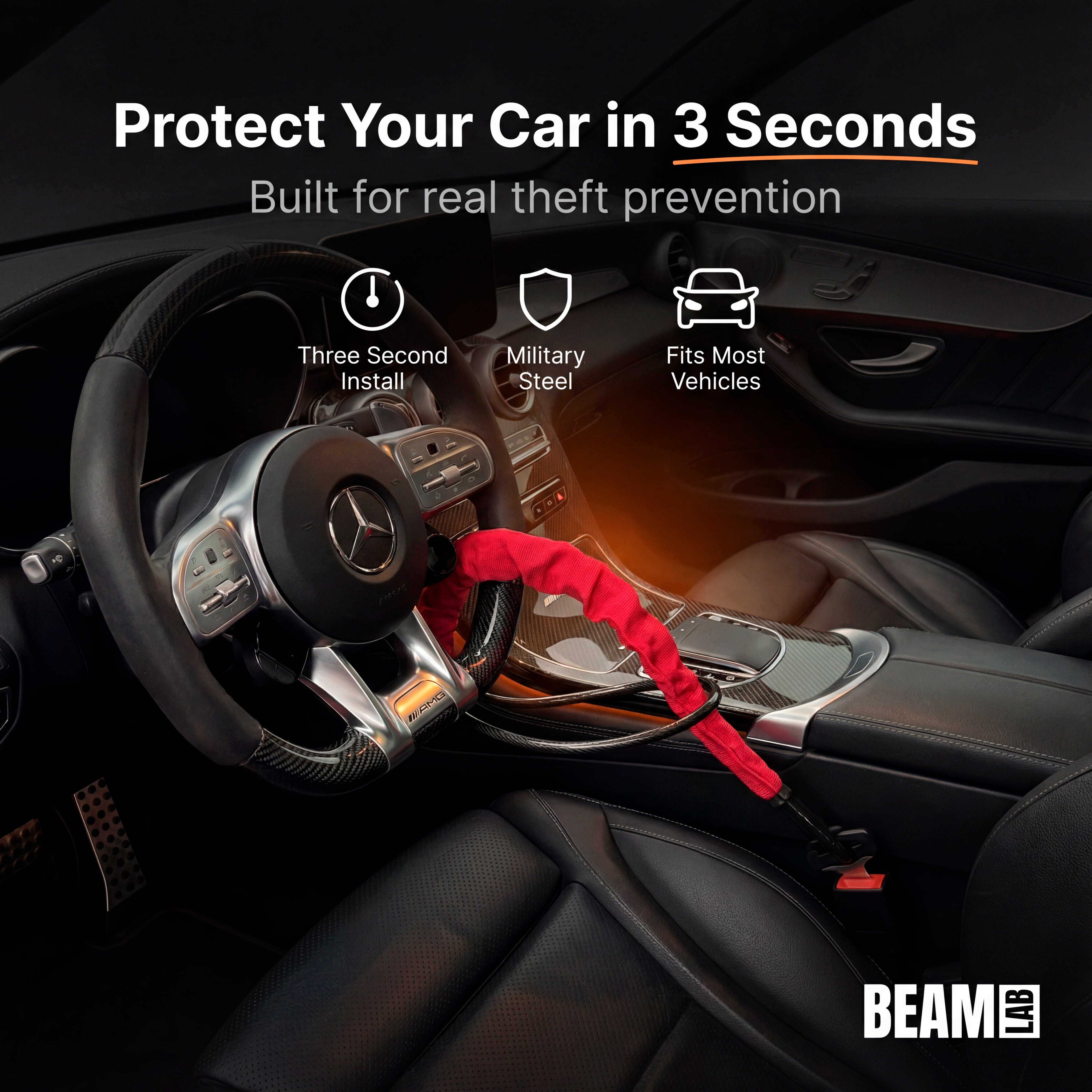
Now the wheel cannot turn. Think about what that does to the relay thief. His attack worked perfectly — the doors opened, the engine may even be running. And the car still cannot be steered out of the driveway. His electronics have nothing left to say to it. The buckle won't release without the lock's key, the cable won't stretch, and the wheel won't move. His minute is up.
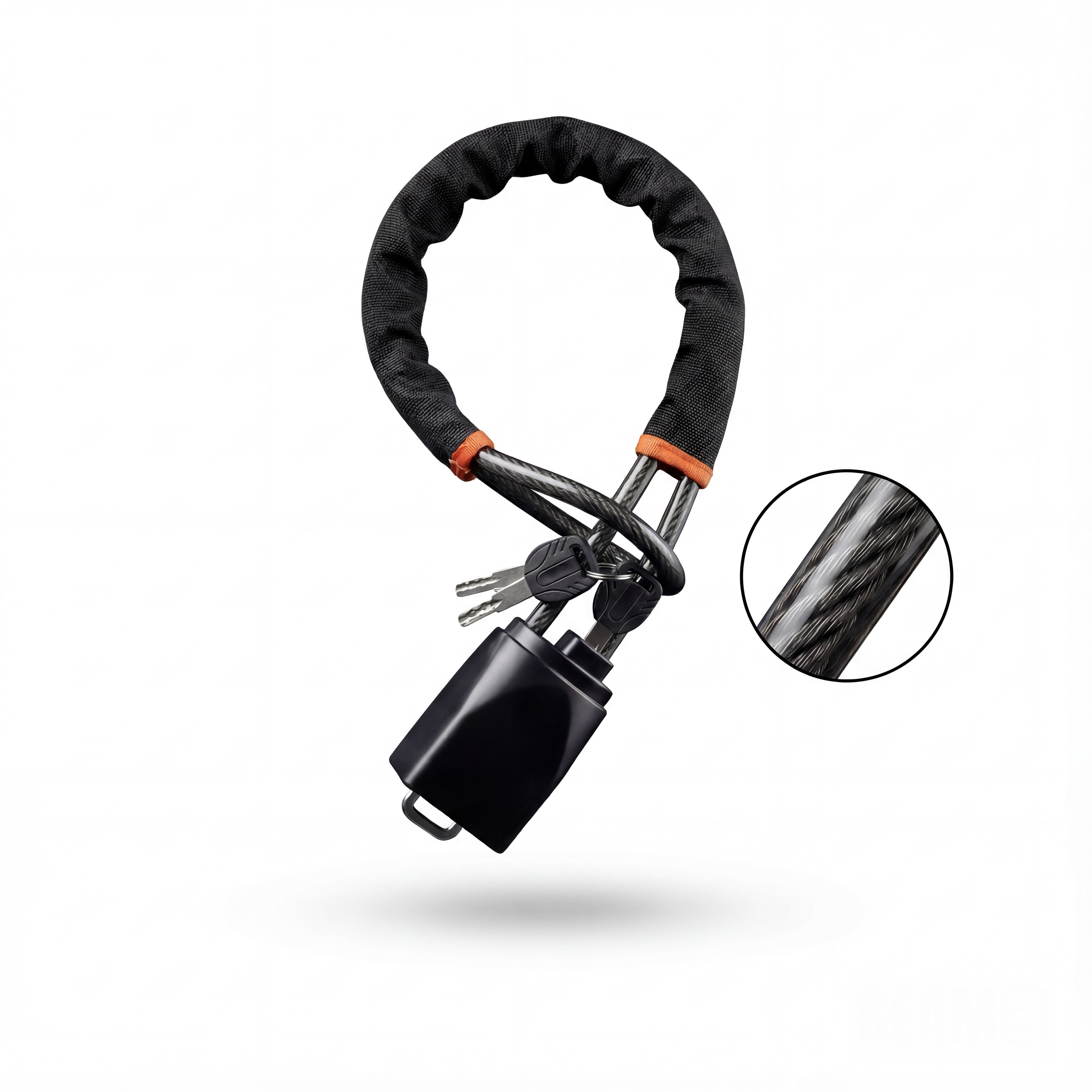
In BEAM Lab's testing it resists over 2 tons of pulling force and has been run against bolt cutters, saws, and grinders. It sits tight around the rim — no slack to attack.
The genius move. Seatbelt buckles are engineered to hold thousands of pounds and release only by their button — which the lock body covers. The anchor came with the car.
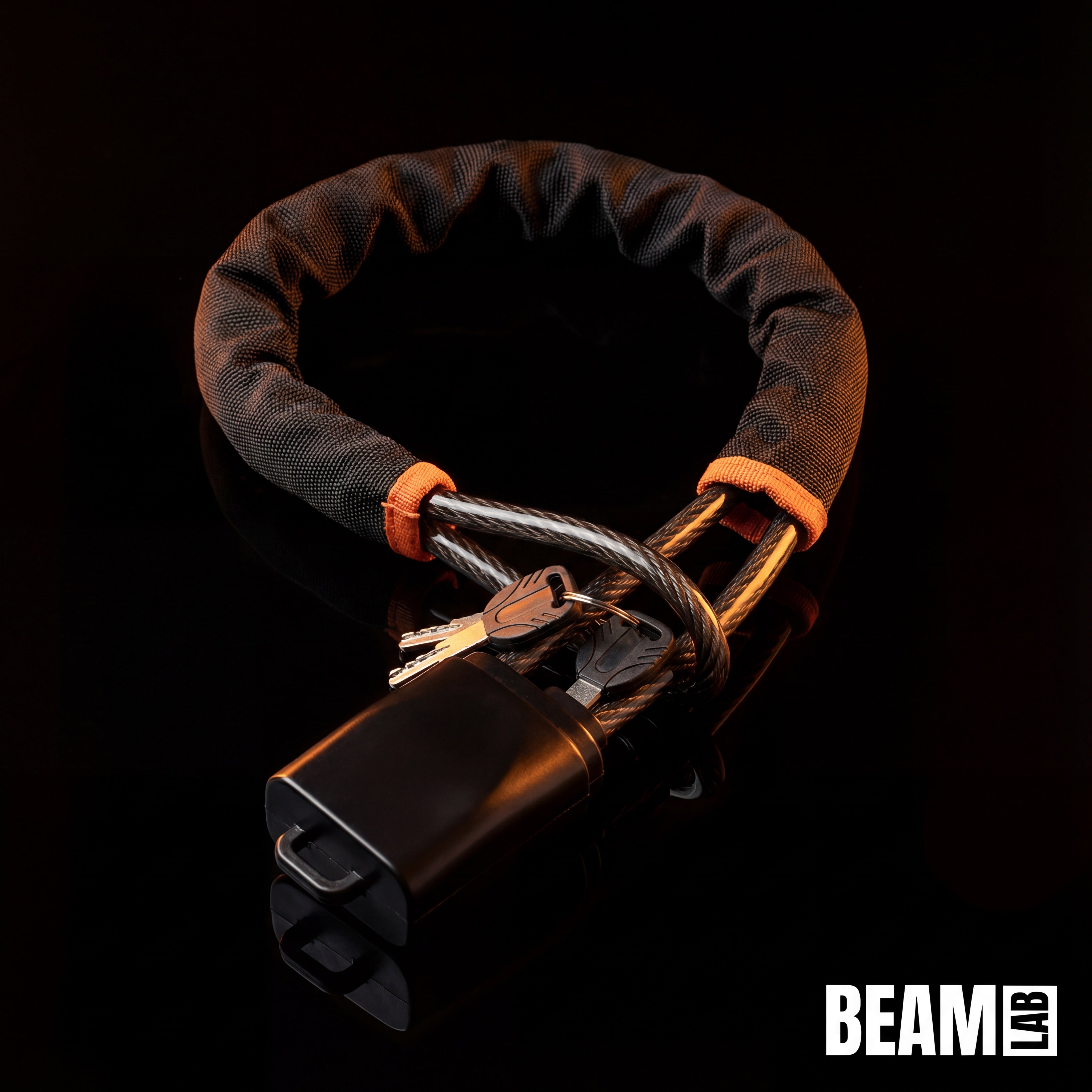
A keyed cylinder, tested past 50,000 lock cycles, with a protective coating that won't mark leather, wood, or plastic wheels. Nothing to charge, pair, or update. Ever.
And because the install is genuinely three seconds, it survives the thing that kills every other physical lock: human laziness. The old bars died in trunks because they were a two-minute wrestling match. A loop-and-click that's faster than plugging in your phone actually becomes the nightly ritual — and a lock you actually use is worth ten you don't. It fits 99% of cars, trucks and SUVs from the past 30 years, on any wheel diameter.
Now the paragraph that BEAM Lab, to their credit, didn't ask us to soften: a steering lock is a deterrent, not a fortress. Given unlimited time, privacy, and power tools, a determined crew can defeat any consumer security device ever made — this one included. Anyone who promises you "theft-proof" is lying to you.
But re-read the sentence: unlimited time and privacy is exactly what a thief in your driveway doesn't have. He picks targets in seconds, from the sidewalk, ranking your street by effort. A visible steel cable on the wheel tells him — before he even opens his backpack — that this car costs minutes and noise instead of silence and seconds. So he does what one victim on a theft-recovery forum said thieves always do: "they just move to the next car." The lock doesn't have to be unbeatable. It has to make you not worth the trouble — and against a criminal whose whole business model is speed and silence, that bar is lower than you'd think.
The honest part most ads won't print
That's also why the honest advice is layers: keep the Faraday pouch, keep the keys deep in the house, and put steel on the wheel. The pouch fights the radio attack. The lock ends the conversation if the radio attack wins. One owner put it this way on a forum after his neighbor's SUV vanished: "My mistake was thinking no one would want to steal my car. I'm layering everything now."
What the numbers — and one owner — say
The BEAM Lock has now sold over 12,000 units, and BEAM Lab reports that just 0.3% of units have ever been replaced — a failure rate you almost never see in a product this mechanical. The company backs that with a 30-day money-back guarantee on every order.
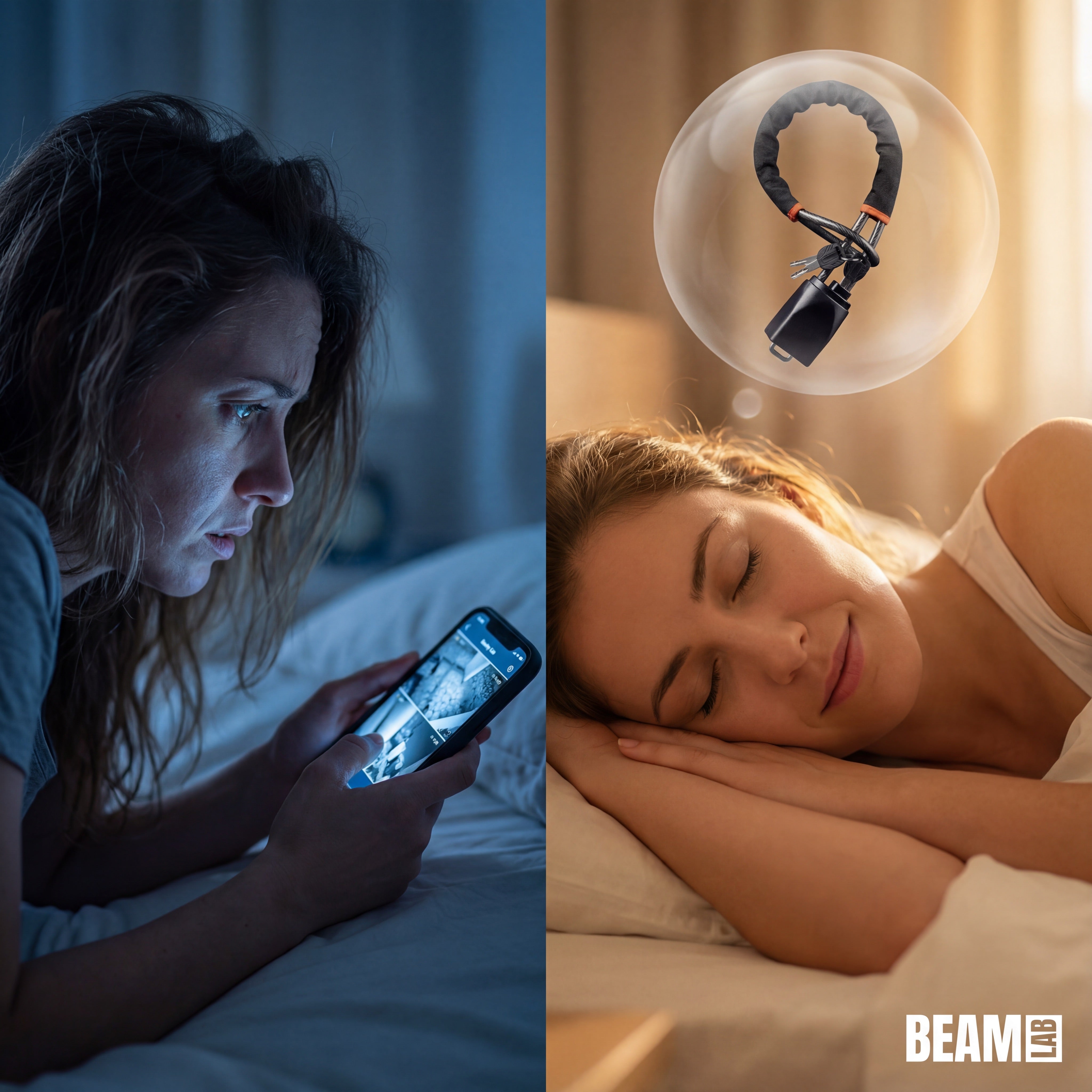
"I finally sleep through the night without obsessively checking my car. Takes literally 3 seconds and I actually use it every single day."
That's the real product, if we're being precise. The cable stops the wheel. What owners are buying is the end of the 2 a.m. window-check — the little jolt every time a car door thunks shut somewhere on the street. Keyless-car owners know exactly the feeling. It's the tax you've been paying since the day you learned what a relay box is.
The offer, plainly
After the Instagram clip crossed 7 million views, BEAM Lab has kept its launch pricing running: $49.95 instead of the regular $99.95. That's the reason for the discount — a wave of new customers is cheaper than a wave of ads, and they know most buyers own more than one car: multi-car bundles save up to 50%, one for each car in the driveway.
The Defense That Isn't Listening.
- Military-grade 5mm steel cable — resists 2+ tons in maker testing
- Anchors into your car's own crash-rated seatbelt buckle
- 3-second install: loop, click, turn the key
- Fits 99% of cars, trucks & SUVs from the past 30 years
- Multi-car bundles save up to 50% · 30-day money-back guarantee
GUARANTEE
Try it on your own wheel for 30 days.
Loop it, click it, live with the ritual. If it doesn't buy you peace of mind, send it back for a full refund — 30-day money-back guarantee, no questions asked.
Questions keyless-car owners ask before they buy
Can't a thief just cut the cable?
Honest answer: with the right power tool and enough undisturbed time, steel can be cut — that's true of every lock on earth. The BEAM Lock's 5mm cable has been tested by the maker against bolt cutters, saws, and grinders, and it sits flush to the rim with no slack to work on. Cutting it in a driveway means minutes of noise and sparks — which is exactly the scene a relay thief chose this crime to avoid. He isn't equipped for it, and he isn't staying for it.
Couldn't they cut the steering wheel rim instead and slip the cable off?
It's the classic internet objection, so here's the straight version: sawing through a padded steel wheel rim is loud, slow, awkward work done hunched inside a cabin — and the cable-plus-buckle anchor means there's no quick pry-and-twist shortcut like the old clamp-on bars had. Nothing about it fits a thief's time budget. Deterrence doesn't require impossible. It requires slower-and-louder-than-the-next-car.
The Club didn't stop thieves 30 years ago. Why would this?
Two differences. First, the anchor: old bars gripped the wheel alone, and defeating the clamp defeated the lock. The BEAM Lock anchors into the seatbelt buckle — hardware crash-rated to hold thousands of pounds that won't release without the key. Second, the math changed: today's thief is an electronics specialist on a sub-minute schedule, not a 90s hotwirer with a toolbox. Against him, forcing the job to become physical is the defense.
I already keep my fob in a Faraday pouch. Isn't that enough?
Keep using it — it's a good first layer. But it protects you only on the nights every fob in the house is actually inside it, and it fails silently when the mesh wears out or someone forgets. The lock is the layer that still works on the night the pouch doesn't. Digital defense plus analog backstop is the whole strategy.
Will it scratch my steering wheel?
No — the cable and lock body carry a protective coating designed for leather, wood, and plastic wheels. After weeks of daily lock-and-unlock in our test cars, the rims showed no marks.
Will it fit my car? And what if it breaks?
It fits 99% of cars, trucks and SUVs from the past 30 years, on any wheel diameter — the cable loop adjusts to the rim, and every car with a seatbelt has the anchor. The lock cylinder is rated past 50,000 cycles, and BEAM Lab backs it with lifetime replacement if it ever breaks, on top of the 30-day money-back guarantee.
P.S. Do the free things tonight — they're most of this article and they cost you nothing: fobs in a pouch, pouch deep in the house, spare fob out of the hallway. Then remember the one sentence that survives every new gadget the thieves buy next year: anything digital can be spoofed; steel isn't listening. A relay box can talk its way past your car's computer in under a minute. It has nothing to say to a cable in a crash-rated buckle. Loop, click, sleep.
ADVERTISING DISCLOSURE: This is a sponsored editorial. The Commuter's Review earns a commission when readers purchase through the links in this article. Our reviews are independent; our revenue is not.
RESULTS DISCLAIMER: The BEAM Lock is a theft deterrent, not a guarantee against theft. No security device can prevent all theft attempts. Strength and durability figures reflect the manufacturer's own testing, not independent certification. Theft statistics cited reflect published national crime data and security-industry research current as of mid-2026; rates vary by region and vehicle model.
INSURANCE NOTE: Insurance outcomes described (actual-cash-value payouts, premium changes, personal-property exclusions) are typical patterns and vary by policy and insurer. Check your own policy documents.