
If Your 2011–2022 Kia Or Hyundai Starts With A Key, It's Missing The Part That Stops Car Thieves — And That's The Manufacturer's Fault, Not Yours
Millions of these cars shipped without an engine immobilizer — which is why a viral video method using a USB cable still works, and why these two brands still account for 1 in 7 cars stolen in America. The automakers' own official remedy tells you exactly what the fix is. Here's that fix, without the 30-year-old problems.
- You drive a Kia or Hyundai, model year 2011 to 2022 — Elantra, Sonata, Tucson, Santa Fe, Forte, Optima, Soul, Sportage, Sorento, Rio, Accent, and most of their siblings.
- Your car starts by turning a physical key in the ignition — not a push-button.
- It parks outside at night — street, driveway, apartment lot.
If your car has push-button start, it has an engine immobilizer and this specific weakness isn't yours. You can stop reading — or keep going, because the second half of this article applies to every car on the street.
There's an uncomfortable sentence at the heart of this story, so let's get it out of the way early: your car was built without a part that almost every other car on the road has had for two decades.
It's called an engine immobilizer. It's a small chip in the key that the engine checks before it will run. No matching chip, no start — even if someone forces the ignition. It became standard equipment on most vehicles sold in America in the 2000s. It is the single biggest reason car theft collapsed from its 1990s peak.
For model years 2011 through 2022, on trims without push-button start, Kia and Hyundai left it out.
You didn't choose that. It wasn't on the window sticker. There was no box you declined to tick. If your car has been broken into, or you lie awake listening for it, hear this plainly: this is a manufacturer's failure, not an owner's failure. You did nothing wrong except buy a sensible, affordable car.
The USB cable trick — and why it still works in 2026
In 2021, videos started circulating on social media showing exactly how to exploit the missing part. Peel back the steering column cover, pop out the ignition cylinder, and turn the exposed switch with the squared-off metal end of an ordinary USB-A cable. On a car with an immobilizer, that gets you nothing — the engine checks for the chip and refuses. On these Kias and Hyundais, the engine starts.
Teenagers timed each other doing it. The videos got millions of views before the platforms took them down. The knowledge never went away — and five years later, it still hasn't.
- US vehicle thefts actually fell to 659,880 in 2025 — down 23%, according to national crime-bureau data. There is no theft epidemic.
- But 14% of all US thefts in 2025 — roughly 1 in 7 — were still these Kia and Hyundai model years. Departments across the country are still issuing warnings about the USB method, and local news still runs the story every few months.
- Read those together and you get the real headline: thieves didn't retire, they got pickier. Overall theft is down because hard targets get skipped. Your car is what "easy" looks like.
That second number should sit with you for a second. These two brands are a fraction of the cars on the road, yet they're still one out of every seven cars stolen in America — years after the videos, years after the headlines. Thieves go where the work is easy, and the whole industry of them knows which badge means easy.
What the automakers did about it — and why it matters to you
When the theft wave hit, Kia and Hyundai's official remedy — the thing they actually shipped to affected owners through city and community programs, by the tens of thousands — was not a recall of the ignition. It was a steering wheel lock.
Read that again. The companies that built the car looked at the hole in their own ignition and decided the answer was a lock on the steering wheel.
That's not a gadget-seller's claim. That's the category being endorsed by the people with the most expensive lawyers in the room. A steering wheel lock is the established, sanctioned fix for this exact car. The problem is that the lock they handed out was the same design your dad had in 1994 — and we'll get to why that design deserved its reputation.
The part nobody warns you about: the break-in you get even when they don't take the car
Here's what the theft statistics don't count. The USB method starts with a smashed rear window — that part works on any car. Whether or not your car leaves the block, you can still wake up to glass across the back seat, a peeled steering column, and a ransacked cabin. One owner put it this way on a forum: "car seats, dashcam, everything — gone." The car was still there. Everything in it wasn't.
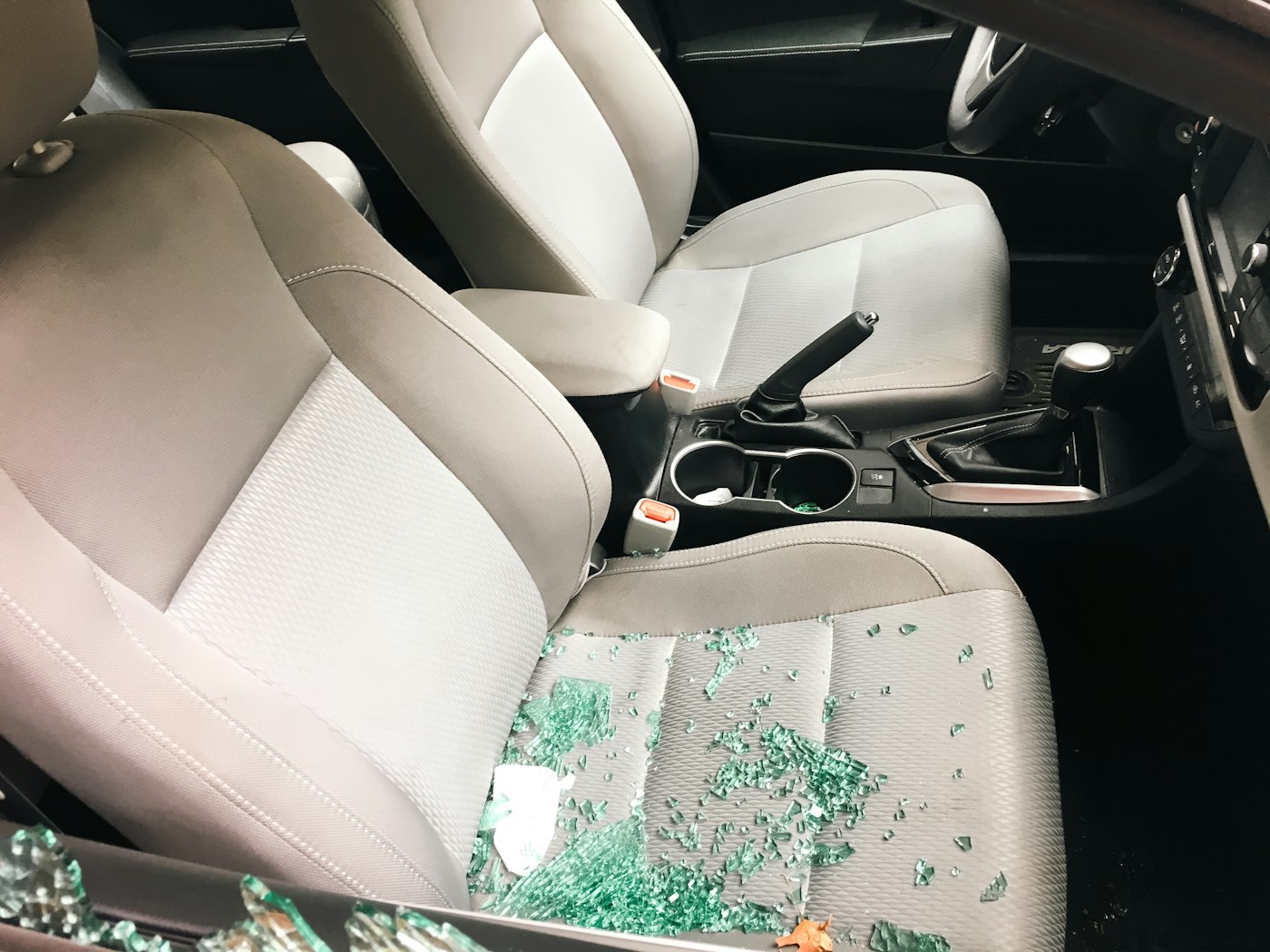
And the aftermath is where it gets genuinely unfair:
Your stuff usually isn't covered. Personal items inside the car — the dashcam, the child seat, the work tools — typically aren't covered by an auto policy at all.
An unrecovered car pays out at actual cash value — what your ten-year-old Elantra was worth on paper, not what it costs to replace it and get to work on Monday.
A theft claim can raise your premiums. You get punished on renewal for the manufacturer's missing part.
Payout takes weeks. Weeks of rides, rentals, and rearranged life before a check arrives.
This is why a visible deterrent earns its keep twice on this car. It doesn't just protect the vehicle — it prevents the attempt itself. A thief who can see through the glass that this Kia is the slow one on the block has no reason to break the window in the first place. No attempt, no glass, no claim, no deductible, no renewal surprise.
What owners try first — and why each one falls short
- The factory alarm. It's already on your car, and the thieves in the videos work right through it. Everyone — including you — has learned to ignore a car alarm. It screams while they drive away.
- A GPS tracker. Useful — for finding out where your car ended up. Often that's a joyride's endpoint, sometimes a stripped shell. Recovery is not the same thing as getting your car back.
- An aftermarket immobilizer install. The proper engineering fix — and a shop job that can run from hundreds of dollars toward $1,500 installed, with an appointment weeks out. Most owners never book it.
- The software update. Worth getting if your car is eligible. But a thief on the sidewalk can't see software. Plenty of patched cars still get the window smashed by someone finding out the hard way. The update protects the car; it does nothing for the glass.
- The old bent-bar lock — the one the automakers handed out. Right idea, 1994 execution. A heavy steel club you wrestle across the wheel at an awkward angle, so most people quit using it by week three. And the street learned its weakness decades ago: it anchors only to the wheel rim itself, so with enough time a thief can hacksaw the rim and slip the whole bar off.
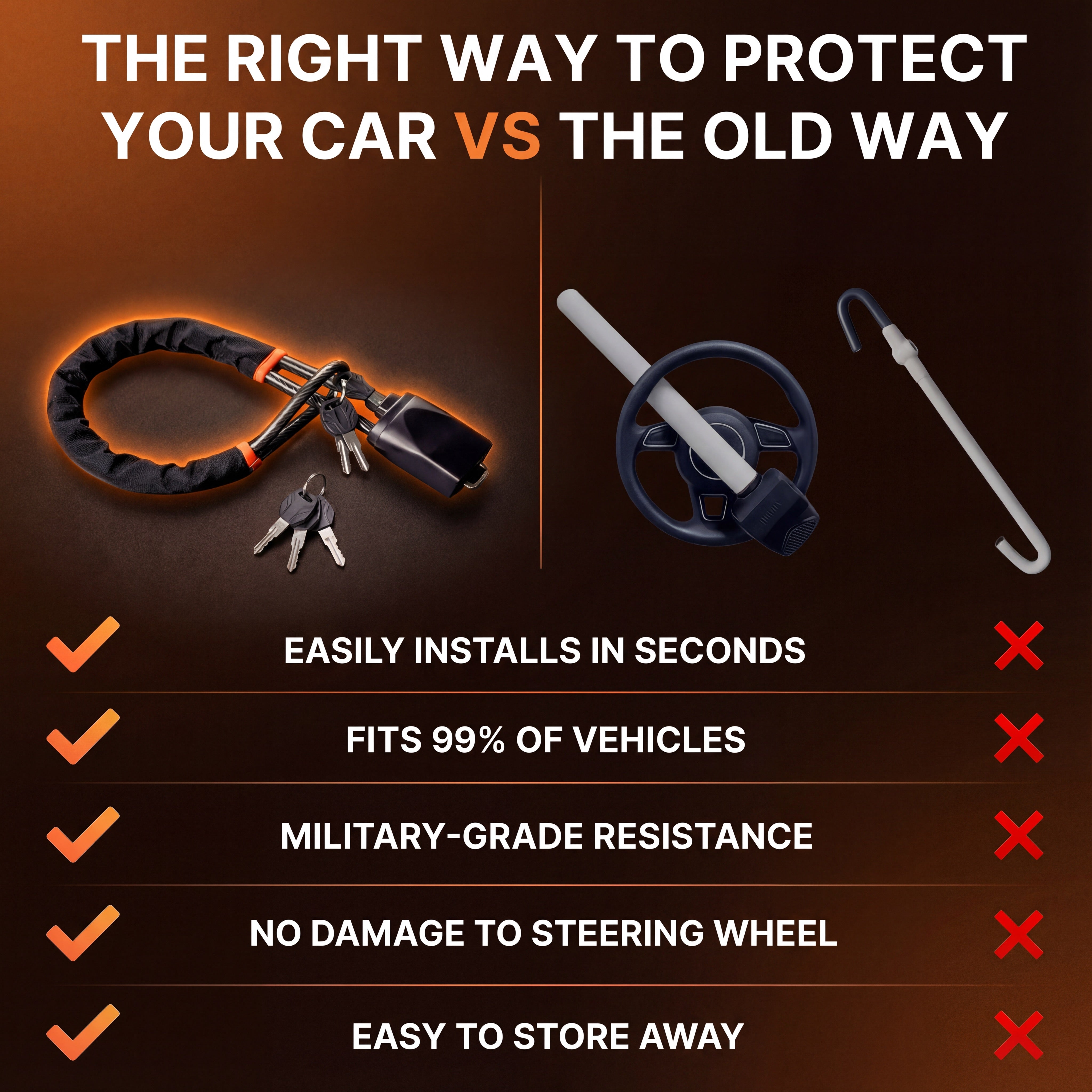
Line those up and the shape of the real answer appears: something visible from the sidewalk (so the attempt never starts), anchored to something stronger than the wheel rim (so the old hacksaw trick dies), and fast enough that you'll actually use it every single night (because the lock left in the trunk protects nothing).
That's exactly the brief a small company called BEAM Lab built to.
The BEAM Lock: the automakers' remedy, rebuilt around your seatbelt buckle
The BEAM Lock — BEAM Lab's Anti-Theft Steering Wheel Lock — drops the bent bar entirely. Instead, a 5mm braided steel cable loops around the steering wheel rim and clicks straight into your car's own seatbelt buckle.
That buckle is the trick. It's not an accessory bolted on somewhere — it's a crash-rated anchor engineered to hold thousands of pounds in a collision, and it cannot release without the lock's key. Once the cable is clicked in, the wheel physically cannot turn.
Which rewrites the USB scenario. Say a thief smashes the glass anyway, peels the column, turns the ignition with the cable end. On this car, the engine starts. And then — nothing. A car that can't steer can't leave the block. The one thing his method defeats (the ignition) is no longer the thing standing between him and your car.
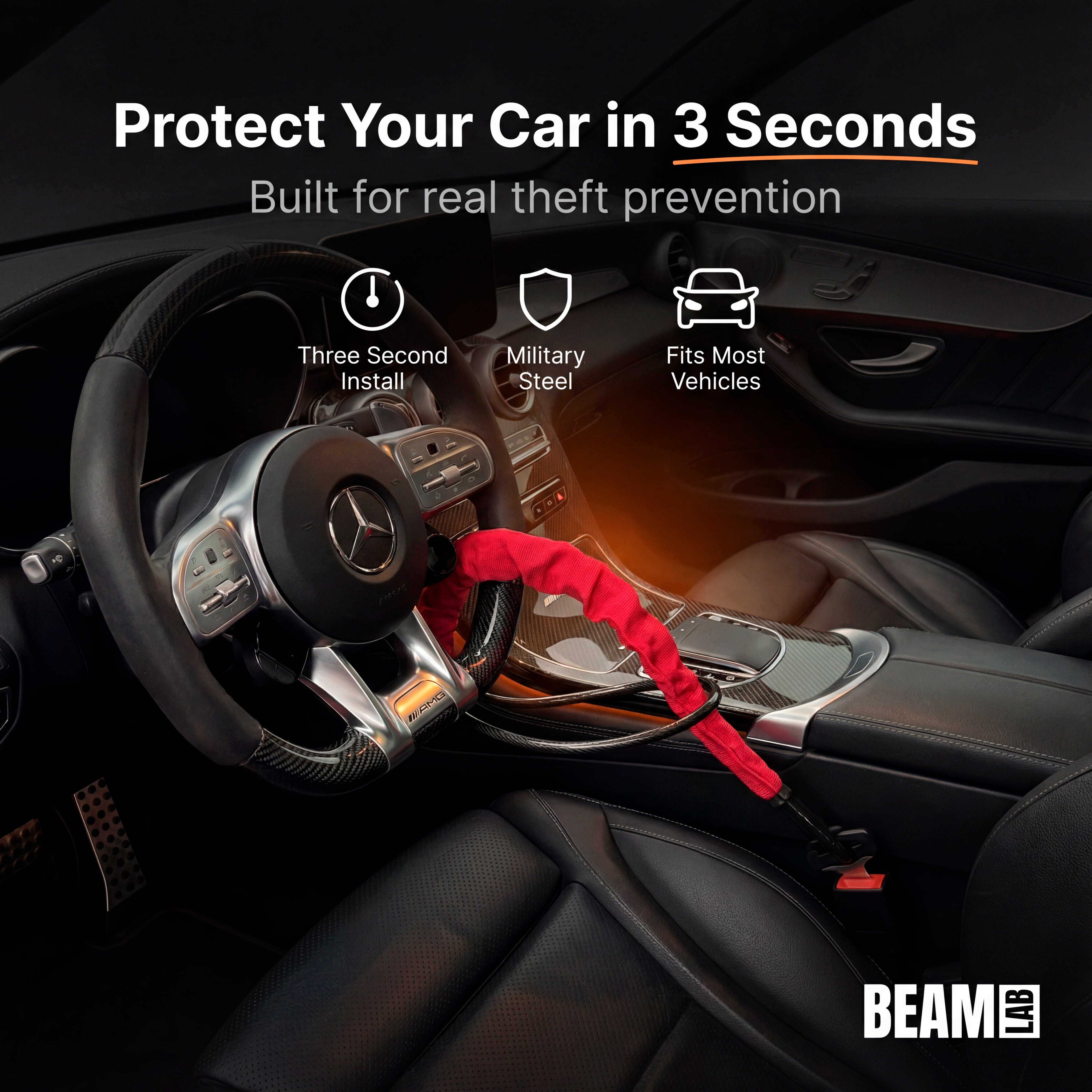
And the install is the reason people actually use it nightly: loop, click, turn the key — 3 seconds. The same motion as buckling in, pointed the other way. No wrestling a steel club at an awkward angle. It lives in the door pocket and becomes part of getting out of the car.
Per the maker's own testing: the 5mm steel cable resists over 2 tons of pulling force and has been tested against bolt cutters, saws, and grinders; the lock cylinder is rated for 50,000+ open-close cycles; a protective coating keeps it from marking leather, wood, or plastic wheels; and it fits 99% of cars, trucks, and SUVs from the past 30 years — any wheel diameter, which matters if there's more than one car in your driveway.
Now the honest part — the sentence no lock company wants to print
No steering wheel lock is a fortress. Including this one. Given a quiet garage, power tools, and unlimited time, a determined professional can defeat any consumer security device ever made. Anyone who tells you otherwise is selling you a story.
Here's why that honesty should make you more confident, not less. A thief working a street operates on a time budget — the whole USB method is famous because it's fast. His decision happens through your window, in seconds: this car, or an easier one? A bright cable locked across the wheel answers the question before he touches the glass. Not "this car is impossible." Just: "this car is the slow one." As one owner put it on a forum: "visible enough that they know they'll need more time — they just move to the next car."
It's the same reason a security-company sign in a front yard works. Deterrence isn't about winning the fight; it's about never being picked for it. Remember the 2025 numbers: thefts nationally fell 23% because thieves got pickier. Deterrence is the whole game now — and on a car the entire theft economy has flagged as "easy," visibly removing yourself from that list is the single highest-leverage move you can make.
Who's already using it
BEAM Lab reports over 12,000 units sold, helped along by a demonstration clip that pulled over 7 million views on Instagram. The number the company is proudest of is quieter: 0.3% of units ever replaced. These things don't come back.
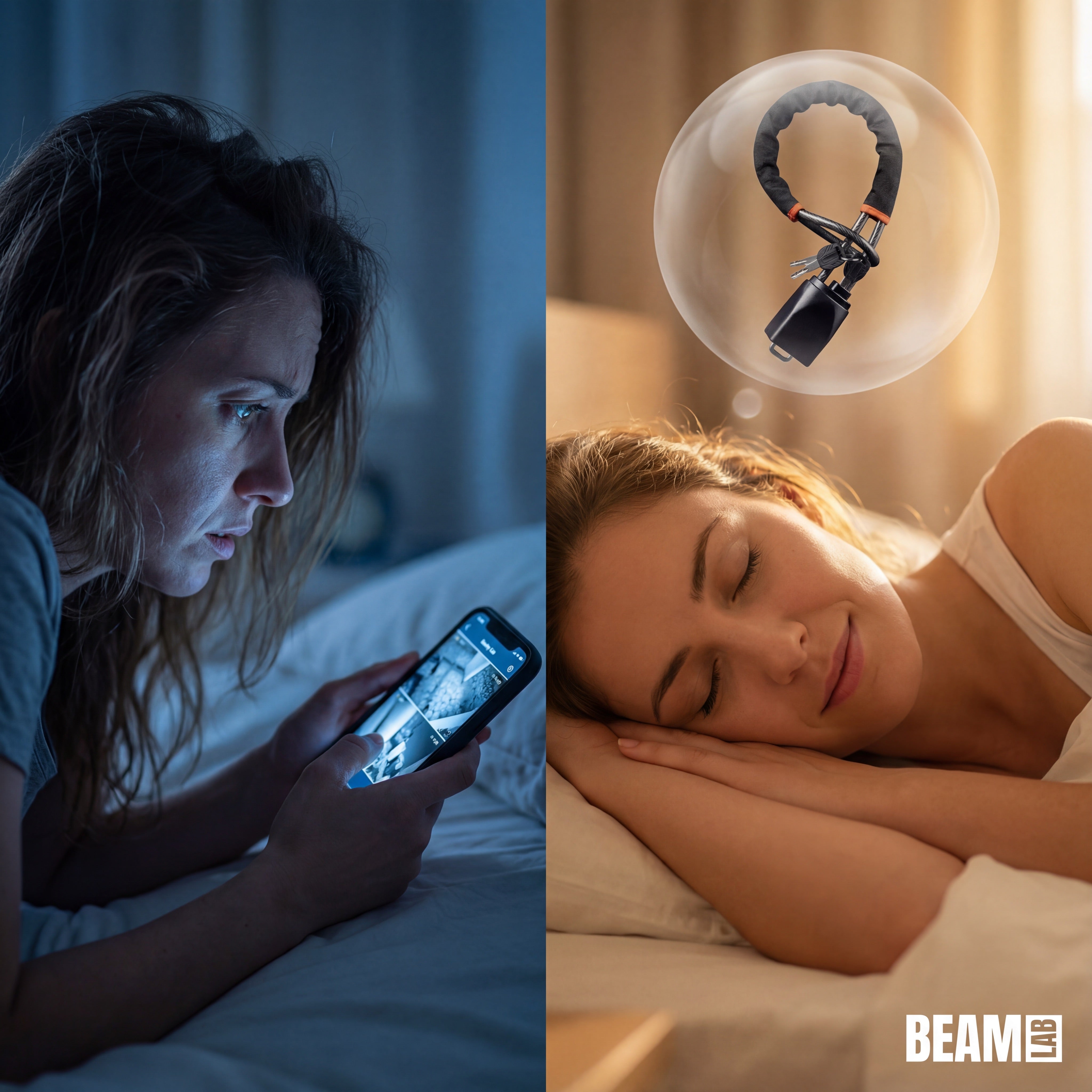
That "I actually use it" is the entire product review in four words. The automakers' handout bars mostly ended up in trunks — a lock you don't use every night is decoration. Three seconds is the difference between owning a lock and having a nightly ritual.
The price, and the honest reason it's half off
The BEAM Lock is $49.95 — down from its regular $99.95. The reason-why is no mystery: after the Instagram wave, BEAM Lab is holding launch pricing while the audience is hot. Multi-car households do better still: bundles save up to 50% — one for each car in the driveway.
Price it against the alternative math on this specific car: a single glass appointment and deductible costs more than the lock. The aftermarket immobilizer quote is up to thirty times more. And the premium bump after a theft claim keeps charging you for years.
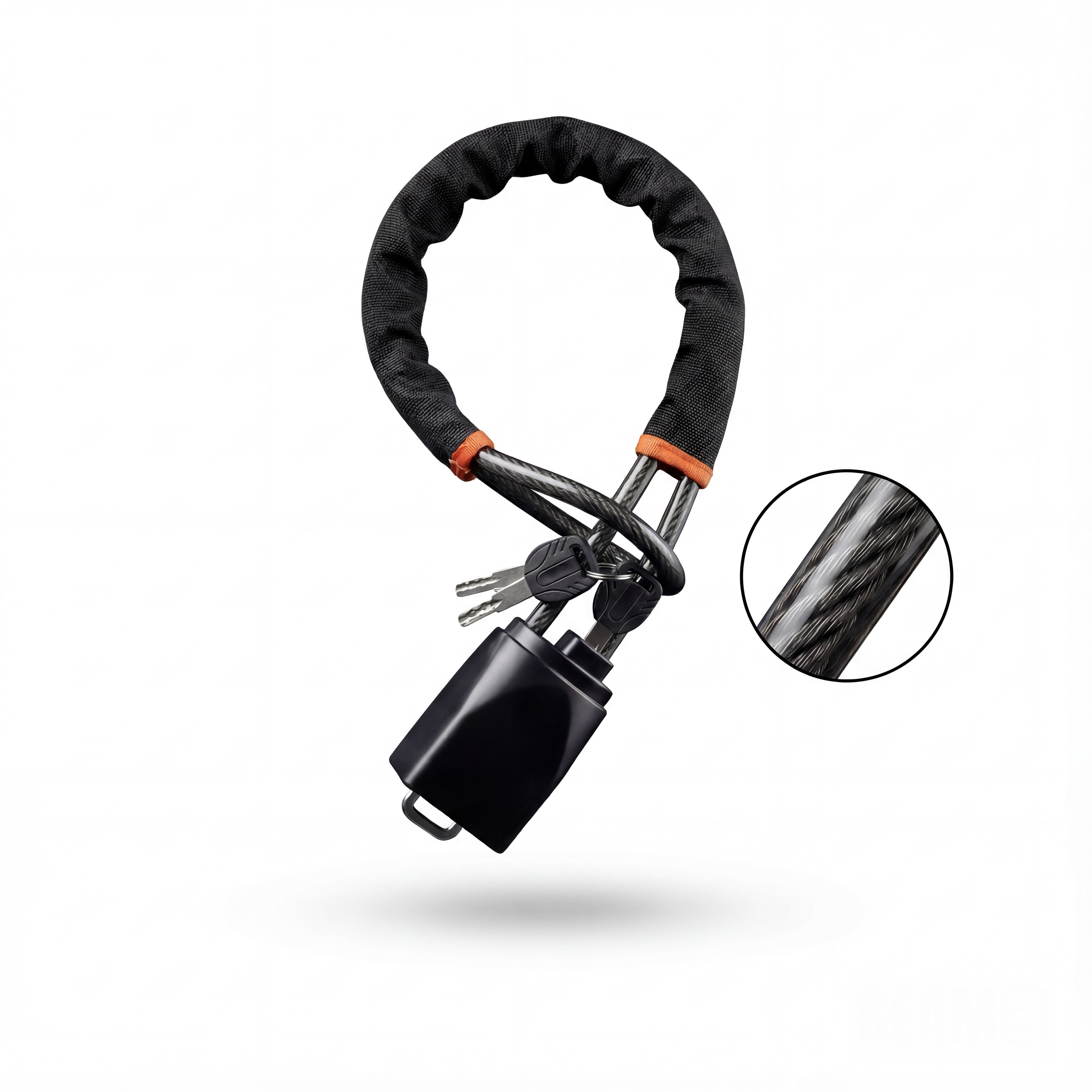
The Fix Your Automaker Endorsed — Without The Bent Bar.
- 3-second install: loop, click into your seatbelt buckle, turn the key
- Crash-rated buckle anchor — wheel physically cannot turn, even with the ignition defeated
- 5mm steel cable — resists 2+ tons in maker's testing vs bolt cutters, saws, grinders
- Visible from the sidewalk — deters the break-in before the glass breaks
- Coated to protect leather, wood & plastic wheels · fits 99% of vehicles from the past 30 years
- Multi-car bundles save up to 50% · ships in 5–10 business days
GUARANTEE
Use it every night for 30 days.
Loop it, click it, live with the ritual. 30-day money-back guarantee: if it doesn't buy you peace of mind, send it back.
Questions Kia & Hyundai owners actually ask
The simplest field test: how does your car start? If your 2011–2022 Kia or Hyundai starts by turning a physical key, it almost certainly shipped without an engine immobilizer — that's the affected group. If it has push-button start, it has an immobilizer and the USB method fails on it. (A push-button car still benefits from a visible deterrent — thieves checking cars can't tell your trim level from the sidewalk — but the specific weakness in this article isn't yours.)
Ask your agent — some insurers offer credits for anti-theft devices, and policies vary. But the bigger insurance win is the claim you never file: a theft claim can raise your premiums for years, an unrecovered car typically pays actual cash value rather than replacement cost, and the personal items inside usually aren't covered at all. The cheapest claim is the one that never happens.
Two reasons. First, the old bars anchored only to the wheel rim, so cutting the rim slipped the whole bar off — the BEAM Lock anchors to your crash-rated seatbelt buckle, a fixture engineered to hold thousands of pounds that won't release without the key. Second, we're not claiming it's unbeatable — nothing is. It's a deterrent, and on the street deterrence is decided in the seconds a thief spends looking through your window. The lock's job is to lose that audition for him.
That was the old bars' weakness, and here's the honest version for this design: the cable sits flush around the rim, leaving no gap to work a tool into, and the anchor point is the buckle, not just the wheel. Could someone saw all the way through a wheel rim eventually? With enough time, tools make short work of anything. But cutting through a steering wheel rim is loud, slow, awkward work in a car parked on a public street — and time is the one thing a thief doesn't have. That's the deterrent doing its job.
No — the cable and contact points carry a protective coating designed not to mark leather, wood, or plastic wheels. Per BEAM Lab's testing, the lock is rated for 50,000+ cycles, so the nightly ritual won't wear it out either.
Keep the update — it helps if someone gets inside. But the update is invisible from the sidewalk, so it doesn't stop the smashed window and the ransacked cabin from someone finding out the hard way. A visible lock works one step earlier: it stops the attempt. Update plus visible deterrent is the layered answer — as one owner put it, "I'm layering everything now."
Only 0.3% of units have ever been replaced — and BEAM Lab backs it with a lifetime replacement if yours ever breaks, on top of the 30-day money-back guarantee.
P.S. — One more time, because it's the part owners carry around as private shame: you didn't cause this. The manufacturer left out the part; the internet published the manual; you're the one lying awake. As one owner wrote, "my mistake was thinking no one would want to steal my car." That wasn't the mistake — the mistake was built in at the factory. The automakers themselves settled the question of what the fix is when they handed out steering wheel locks. Yours can be the version that anchors to a crash-rated buckle, takes 3 seconds, and actually gets used every night. It's $49.95, and the first thing it buys you is tonight.
ADVERTISING DISCLOSURE: This is a sponsored editorial. The Commuter's Review earns a commission when readers purchase through the links in this article. Our reviews are independent; our revenue is not.
RESULTS DISCLAIMER: The BEAM Lock is a visible theft deterrent. No anti-theft device can prevent all theft or break-in attempts in all circumstances. Strength and durability figures reflect the manufacturer's own testing, not independent certification. Insurance outcomes vary by policy and provider — consult your insurer.
VEHICLE NOTICE: Immobilizer fitment varies by model, year, trim, and market. Check your vehicle's documentation or dealer to confirm your configuration. Statistics cited reflect published national 2025 crime data.